
Check Criminal History in Lynchburg City
Lynchburg criminal records are divided by event and custodian. The Virginia Judiciary Online Case Information System is the broad public starting point for court matters. Select Lynchburg City, then check General District Court for adult misdemeanors, traffic-criminal cases, and felony preliminary proceedings. Search Circuit Court as well because an indicted felony or district appeal receives a separate circuit file. A recent booking may appear through the regional detention channel before either court index shows a case.
Use a full legal name, spelling variants, a narrow date range, and a court-specific case number when known. Match the court, charge, hearing date, and final disposition instead of relying on a name alone. For a complete self-review, compare the state repository entry with both court levels. A late disposition, an old paper file, or a changed case number can explain why two Lynchburg record sources do not yet agree.
- Search OCIS with Lynchburg City selected and note each court-specific case number.
- Repeat the name search in the General District and Circuit Court systems.
- Check the regional jail or Virginia VINE when recent custody is the main question.
- Ask the correct clerk, police unit, or jail custodian for the underlying document.
- Order an SP-167 report for your own statewide Virginia repository review.
Lynchburg City Criminal Record Geography
Lynchburg is both an independent city and a county-equivalent. It has no county government layered above it and no smaller incorporated cities to rank within its borders. That status explains why official systems label the locality “Lynchburg City,” why the local police department handles the primary city incident records, and why the three state court clerks sit at separate Court Street counters. Nearby communities in Bedford, Amherst, and Campbell Counties are not Lynchburg record offices.
The division is practical. Circuit Court is at 900 Court Street, General District Court is at 905, and Juvenile and Domestic Relations District Court is at 909. Police records are now held away from that court cluster at the LPD headquarters. A person who asks one counter for a complete Lynchburg criminal history will be routed elsewhere because each office can release only the records it keeps.
The current Lynchburg police records channel shows where LPD routes public requests.
The portal separates police-record custody from the downtown court files and makes the correct starting office easier to identify.
Official Virginia Background Checks
The Virginia Department of State Police maintains the central criminal-history repository through its CARE and Central Criminal Records Exchange functions. A general member of the public uses the official SP-167 process for a name-based Virginia criminal-history request. The subject signs before a notary. If results go to a second recipient, that recipient section also needs a notarized signature. The completed form is mailed, and VSP states an approximate processing time of 15 business days after receipt. There is no same-day service.
The online workflow generates current payment and mailing instructions. It also offers optional remote online notarization for $25. That fee is separate from the record-search charge shown on the generated form. Fingerprint-based Virginia checks use CARE, SP-325, or another program-specific route when a law authorizes the purpose. Lynchburg Police can provide fingerprinting by appointment, but a fingerprint card alone does not authorize release of state criminal-history data.
| Channel | Identity Basis | Best Use |
|---|---|---|
| Lynchburg court search | Name or case number | Public case events, charges, and outcomes |
| VSP SP-167 | Name and identifying data | Official Virginia repository self-review |
| Authorized Virginia check | Fingerprints | A statutory program with an approved account |
| FBI Identity History Summary | Fingerprints | Subject's own federal identity-history review |
Four Lynchburg Arrest Record Trails
One Lynchburg arrest can create four related records. The officer writes an incident or arrest report. If custody continues, the Lynchburg Adult Detention Center creates an intake file with booking, fingerprint, property, screening, hold, and release details. A magistrate records probable cause and bail action. General District Court then opens a case when charges are filed, and a felony may later move into Circuit Court after indictment or certification.
Reportable fingerprints and arrest data also flow to the Virginia State Police repository. The court or another reporting agency later supplies the disposition. These documents are not copies of one master file. The booking sheet proves intake, the police report records the agency account, the docket tracks prosecution, and the repository organizes identity-linked arrest and disposition cycles.
- Charge
- An alleged offense. It may change before final disposition.
- Disposition
- The recorded outcome for a charge or case.
- Nolle prosequi
- A prosecutor's choice not to proceed at that time. It is not a conviction.
- Capias
- Virginia court process directing that a person be taken into custody.
- Sealing
- A statutory limit on public access that differs from traditional expungement.
For the officer and booking side of that chain, the official LPD historical arrest-data page supplies statistical context rather than a personal history.
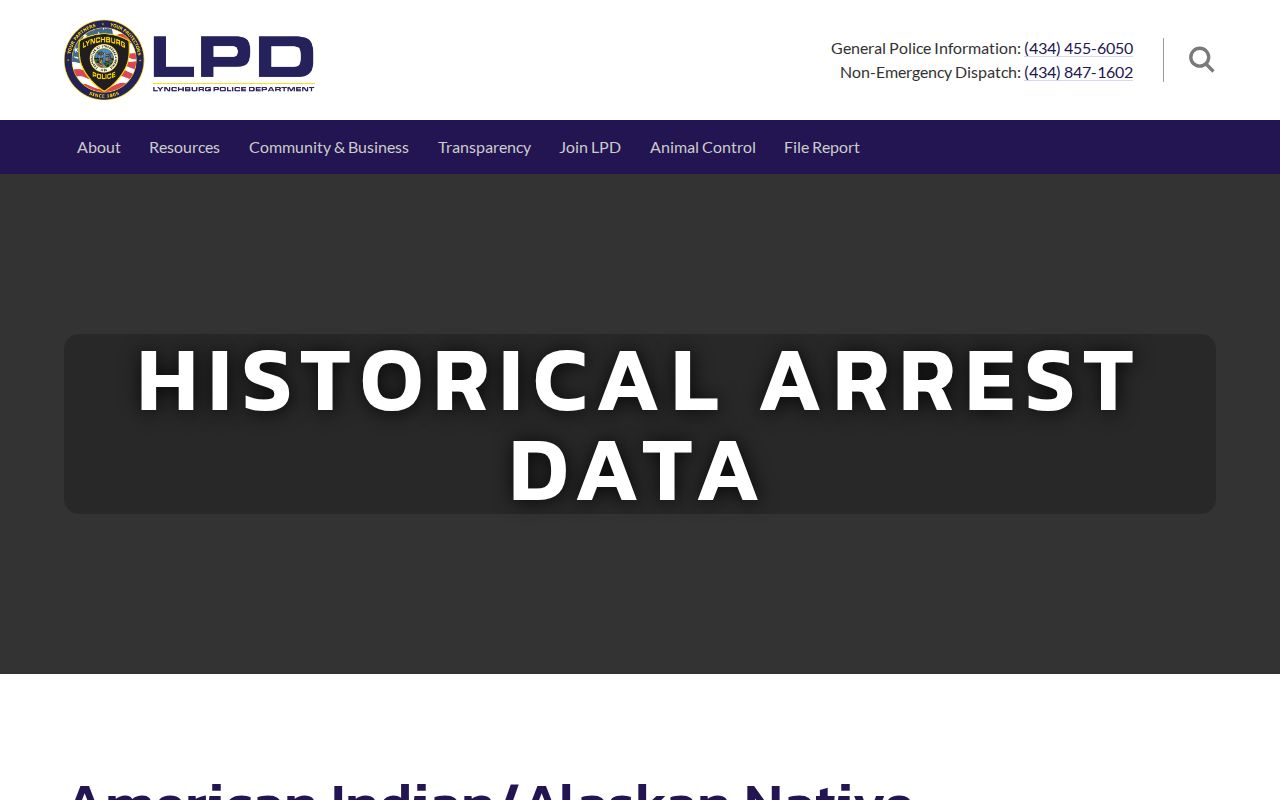
The distinction matters because a chart of incidents or arrests cannot establish the outcome of any named court case.
Types of Lynchburg Criminal Records
Local records answer different questions. LPD, Virginia State Police, campus police, and other arresting agencies create incident and arrest reports. The regional detention authority creates booking and custody records. Magistrates and judges issue warrant process and set initial bail terms. General District Court tracks most adult misdemeanor cases and the early stages of felonies, while Circuit Court holds indictments, felony trials, district appeals, judgments, and related financial entries.
VSP maintains the identity-centered repository record. VADOC holds state custody and adult probation or parole data. The Virginia Sex Offender and Crimes Against Minors Registry publishes only the fields authorized for registry cases. Juvenile files remain subject to separate confidentiality rules. An ordinary adult court search is not a route around those restrictions.
- Police report: the event narrative, officer action, and evidence information, subject to redaction.
- Booking file: intake, initial charges, holds, custody, and release data.
- Court file: filed charges, hearings, pleas, rulings, outcome, and sentence.
- Repository history: identity-linked Virginia arrests and reported dispositions.
- Corrections record: state custody or public supervision status.
Details about local intake and agency records are covered in the Lynchburg City arrest history process.
Search Lynchburg Criminal Cases in OCIS
OCIS is a locator and status tool, not a bundle of all filings. Accept the site terms, choose the right court level and locality, and search by the strongest identifier available. District and circuit case numbers are not interchangeable. A name search may show the charge, hearing history, counsel, outcome, sentence, costs, and payment status, yet the public index generally does not provide the indictment, police narrative, exhibits, or sealed documents.
Search both court levels for a felony. The General District entry can show the preliminary stage, while the Circuit entry records the indictment and later prosecution. A district misdemeanor appealed de novo also creates a circuit trail. If a Lynchburg case result is missing, try spelling variants, check federal PACER when appropriate, and ask the correct clerk about older or archived material.
| Search Control | Use | Lynchburg Note |
|---|---|---|
| Court level | Select OCIS, Circuit, or General District | Search more than one system when a case moved |
| Locality | Choose court or city | Select Lynchburg City |
| Name | Party-name search | Exact spelling reduces false matches |
| Case number | Direct record route | Use the number assigned by that court |
| Hearing date | Narrow a docket | Useful for recent events |
| Case type | Separate criminal, traffic, and civil | Juvenile public access remains limited |
What a Lynchburg Criminal Record Shows
A Virginia repository report is built around a subject identity and reported criminal-justice cycles. It may connect names and aliases with an arrest date, arresting agency, charge, court tracking, disposition, sentence, custody, and supervision. A public SP-167 result is governed by state dissemination law and should not be assumed to expose every field available inside law-enforcement systems.
Lynchburg court records organize data by case instead. A filed charge can differ from the arrest charge, and each count may have its own outcome. Read pending, dismissed, acquitted, nolle prosequi, and convicted entries as distinct results. Booking information focuses on intake and present custody. It does not prove guilt or replace the final court disposition.
| Name and Identifiers | Displayed name, aliases, and limited identity fields allowed for that system. |
|---|---|
| Arrest and Booking | Date, agency, intake identifier, initial charges, bond or hold, and release event. |
| Charges and Statutes | Alleged offense, cited code section, and any later amended or indicted charge. |
| Disposition | Outcome for each count, such as conviction, dismissal, acquittal, or nolle prosequi. |
| Sentence | Confinement, suspended time, probation, fine, costs, and restitution when public. |
| Custody or Supervision | Public VADOC location, release-related information, or supervision status within published limits. |
Lynchburg Criminal History by SP-167
SP-167 is not an instant online name search. The VSP workflow creates a form that must be signed, notarized, and mailed. One form covers one request. A second person named to receive the result completes the recipient block and has that signature notarized too. VSP directs the packet to CARE in North Chesterfield and states that processing takes about 15 business days after the mail arrives.
The LPD GovQA login screen serves a different purpose: it routes requests for existing City police records.
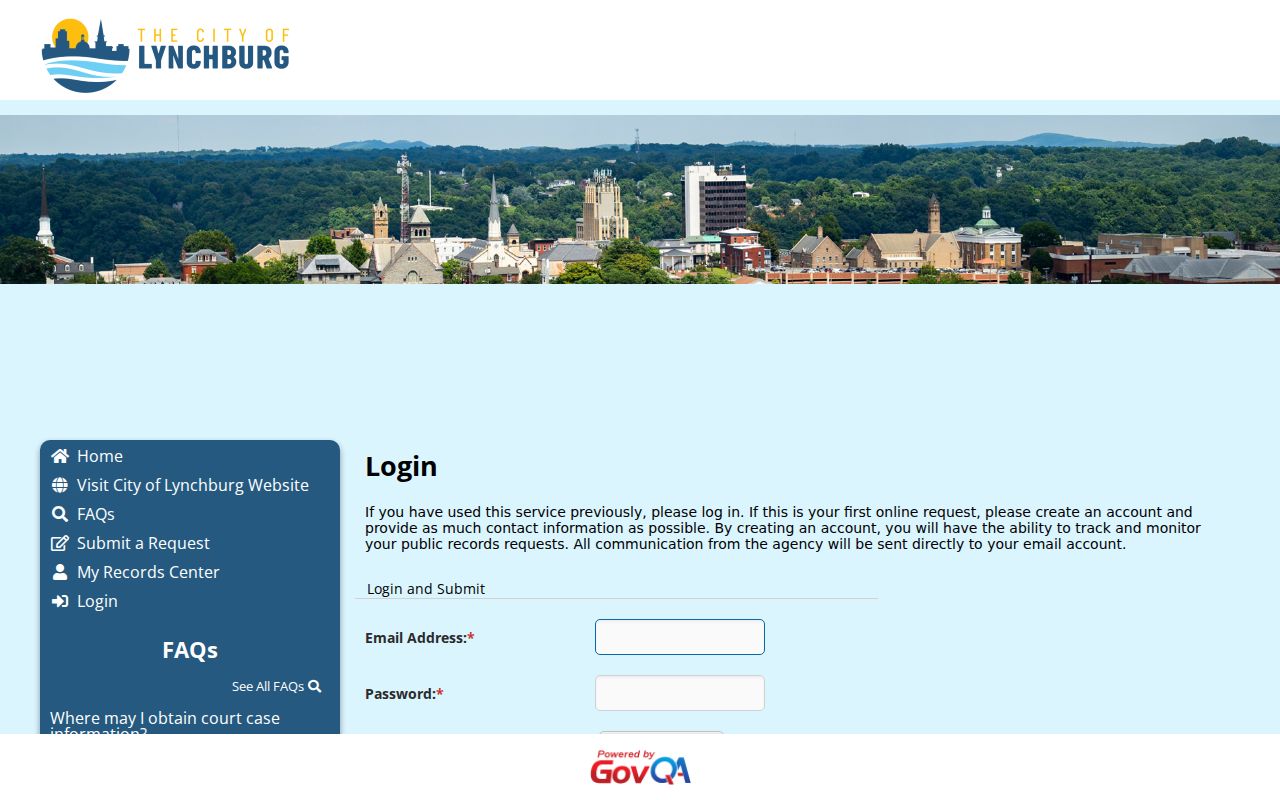
A GovQA police report request cannot produce the statewide repository history that VSP compiles, and SP-167 cannot supply LPD's full investigative file.
Note: Confirm the current SP-167 search fee on the generated form before mailing because VSP may revise payment instructions.
Public Access Laws for Lynchburg Records
The Virginia Freedom of Information Act governs many records held by Lynchburg public bodies, but courts administer judicial files under judiciary rules. A City request can seek an existing LPD report, recording, log, or policy. It cannot force staff to answer questions, perform research, or create a criminal-history summary. The City generally uses a five-working-day response framework and may invoke seven more working days when a response is not practical within five.
Police records also receive special treatment. Investigative material, protected victim or witness details, juvenile information, personal identifiers, and safety-sensitive content may be withheld or redacted. VSP controls repository dissemination, and registry publication has its own statute. Public access never authorizes threats, harassment, or identity misuse.
Key Virginia laws:
Virginia Code § 2.2-3700 et seq. establishes VFOIA access and response procedures, subject to exemptions.
Virginia Code § 2.2-3706 addresses law-enforcement records, recordings, and protected investigative details.
Virginia Code § 19.2-389 controls authorized criminal-history dissemination.
Virginia Code § 19.2-392.2 sets the traditional petition-based expungement process.
Virginia Code § 9.1-913 defines public registry fields and the business-day update duty.
Lynchburg Criminal Warrant Fallback Chain
No complete public Lynchburg active-warrant list was verified. A possible adult warrant or capias may connect to a magistrate, General District Court, Circuit Court, or J&DR Court. Begin with OCIS to identify a public docket. Then contact the clerk tied to that case and a qualified lawyer. Use official LPD or Sheriff contacts for surrender instructions rather than acting on a claim from an unofficial search page.
Some process remains unavailable before execution. A sealed indictment, search-warrant affidavit, or VCIN and NCIC information does not become public simply because someone asks for it. After a warrant is served or recalled, system updates may lag. Keep the court receipt or order and confirm the change with the issuing clerk.
Current law and procedure matter when the search involves a felony classification. The official Virginia felony punishment ranges provide the source shown below.
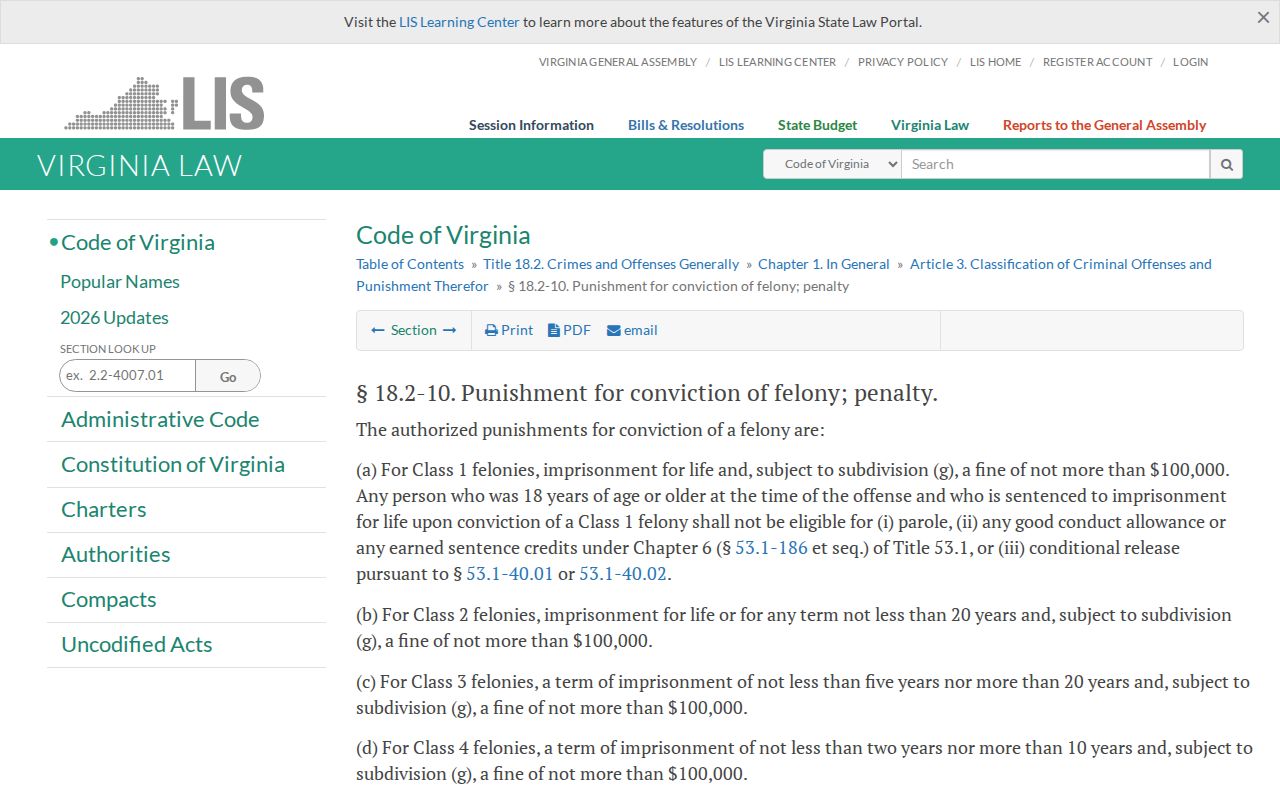
Those class ranges do not establish guilt, predict a sentence, or determine whether a particular Lynchburg record can be sealed.
Sealed, Expunged, and Restricted Records
Juvenile delinquency files are not ordinary public adult records. Public copies may also omit Social Security numbers, full birth dates, financial details, minor identities, and protected victim or witness information. A sealed warrant or indictment can remain unavailable until the law allows release. An empty public search therefore is not proof that no record ever existed.
Virginia still uses “expungement” for the remedy in § 19.2-392.2 and uses “sealing” for newer automatic and petition-based provisions. Eligibility depends on the exact outcome and current statute. Lynchburg's local filing instructions state that eligible petitions filed on or after July 1, 2026 have no filing fee and estimate three to six months. Petitioners must identify each charge and case number and attach certified charging documents showing the final disposition.
Start with a certified disposition from the correct Lynchburg clerk. Compare it with the VSP record, use the current judiciary form, and retain certified copies of any final order. A dismissal does not guarantee relief, and no public page can determine eligibility from a label alone.
The misdemeanor class source is the Virginia misdemeanor punishment statute.
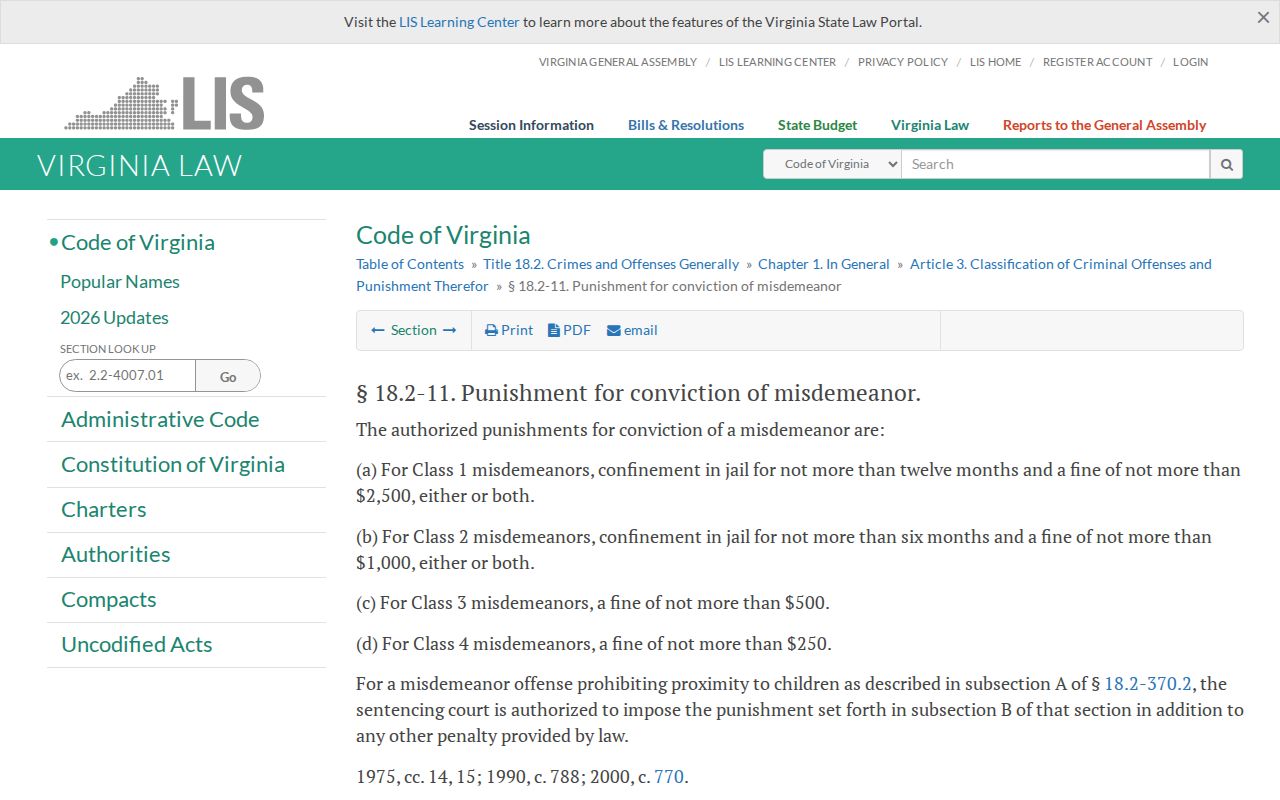
Classification and disposition must be read separately because neither one alone proves that a record qualifies for expungement or sealing.
Lynchburg Booking and State Custody
The Blue Ridge Regional Jail Authority's Lynchburg Adult Detention Center handles local booking and pretrial custody. Its official-linked JailTracker and the facility phone are the first channels for a recent local custody question. Virginia VINE adds custody-status search and notifications, but it is not a certified booking sheet. The booking custodian holds intake documents, while LPD holds the officer's report and the court clerk holds filed charges and outcomes.
VADOC's Inmate and Supervisee Locator applies when a person is under state corrections authority. It does not replace the local jail channel. District 13 Probation and Parole serves Lynchburg from Florida Avenue, but public locator information is much narrower than an officer's supervision file. Federal custody uses the Bureau of Prisons locator, and federal cases are searched through PACER rather than Virginia OCIS.
Lynchburg Adult Detention Center
510 9th Street, Lynchburg, VA 24504
434-847-1300
Local booking and custody records
Lynchburg Circuit Court Clerk
900 Court Street, Lynchburg, VA 24504
434-455-2620
Felony and appealed case files
Lynchburg General District Court
905 Court Street, Lynchburg, VA 24504
434-455-2630
Misdemeanor and preliminary case files
LPD Records Unit
3405 Odd Fellows Road, Lynchburg, VA 24501
434-455-6052
Police reports and City record requests
Lynchburg Police Criminal Record Requests
The LPD Records Unit accepts requests through GovQA, phone, mail, email, fax, or an in-person visit. Describe an existing record with a report number, date, place, event type, and requested format. The City may charge actual reasonable search and duplication costs. A requester can ask for an estimate first, and an estimate over $200 may require a deposit before work continues.
An eligible incident or accident verification request covers one report and carries a $10 nonrefundable service and search fee. Card payments add 2.25 percent, and LPD does not take a card by phone. City duplication rates vary by paper size, color, and whether the copy is single- or double-sided. Electronic and nonstandard work is billed at actual cost. These fees do not buy unrestricted investigative content, which may remain limited or redacted.
Lynchburg's recent leadership archive documents the community-informed police-chief search.
The archive is useful local context, but official news items are selective and do not replace a complete police report or court docket.
The City's later police-chief selection notice records the January 2026 appointment.
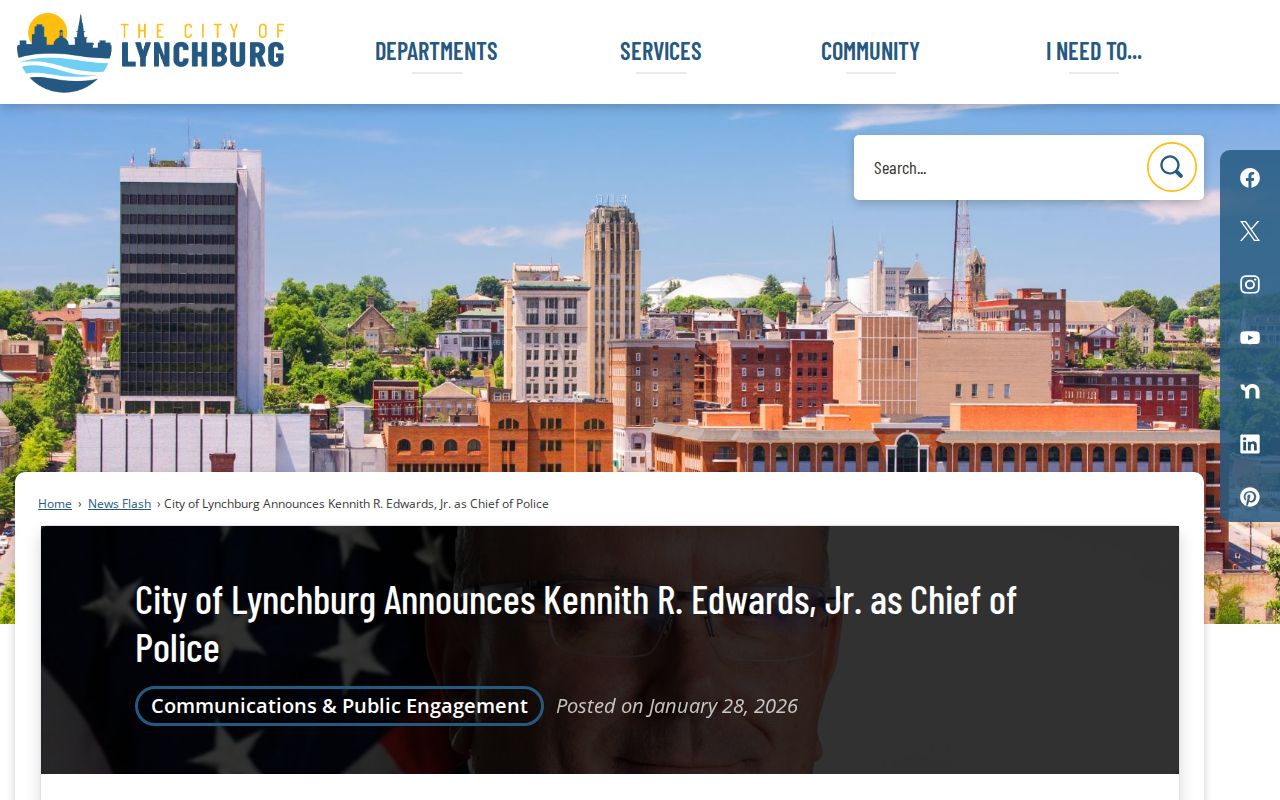
Leadership changes do not alter which agency owns an arrest report, booking file, or court judgment.
Lynchburg City Criminal Records Guide
Lynchburg contains no subordinate incorporated city or town. Its only qualifying city profile is Lynchburg itself. The city guide stays at local altitude: LPD report requests, the regional booking arrangement, the absence of a municipal court, and the handoff from General District Court to Circuit Court. It does not pad the list with Forest, Madison Heights, Timberlake, or a municipality in a neighboring county.
The 2025 Census estimate was 81,347. That figure describes the jurisdiction and should never be treated as a measure of criminal behavior. For record access, the key fact is governmental structure: searchers choose Lynchburg City as the locality and use Virginia's district and circuit courts rather than a city municipal court.
Lynchburg Criminal History
81,347 · LPD records, regional booking, and Virginia district and circuit court routes